Towing an all wheel drive vehicle requires a very specific process. You cannot treat it like a regular car. Every step matter, and skipping even one can lead to serious mechanical damage. AWD systems stay connected across all four wheels, so the towing method must prevent any unwanted movement.
This guide focuses only on how to tow an AWD vehicle step by step. It avoids distractions and keeps everything clear and practical. If you ever deal with towing in NJ, this process will help you handle it the right way from start to finish.
Step 1: Confirm the Vehicle Has AWD
Before you begin, confirm that the vehicle is actually all wheel drive. You cannot rely on assumptions because many vehicles look similar but use different drive systems. To confirm:
- Check the owner manual that came with the vehicle
- Look for AWD or all wheel drive badges on the rear or side
- Search your exact model online
You can verify specifications using Kelley Blue Book by entering your vehicle details. This ensures you apply the correct towing method.
Step 2: Read the Towing Instructions
Every AWD vehicle comes with manufacturer specific instructions. These instructions are not optional. You must follow them exactly and focus on details like:
- Approved towing method
- Required gear position
- Ignition setting
- Any towing mode or system override
Roadside situations can feel rushed, but taking a minute to check instructions at can prevent costly mistakes.
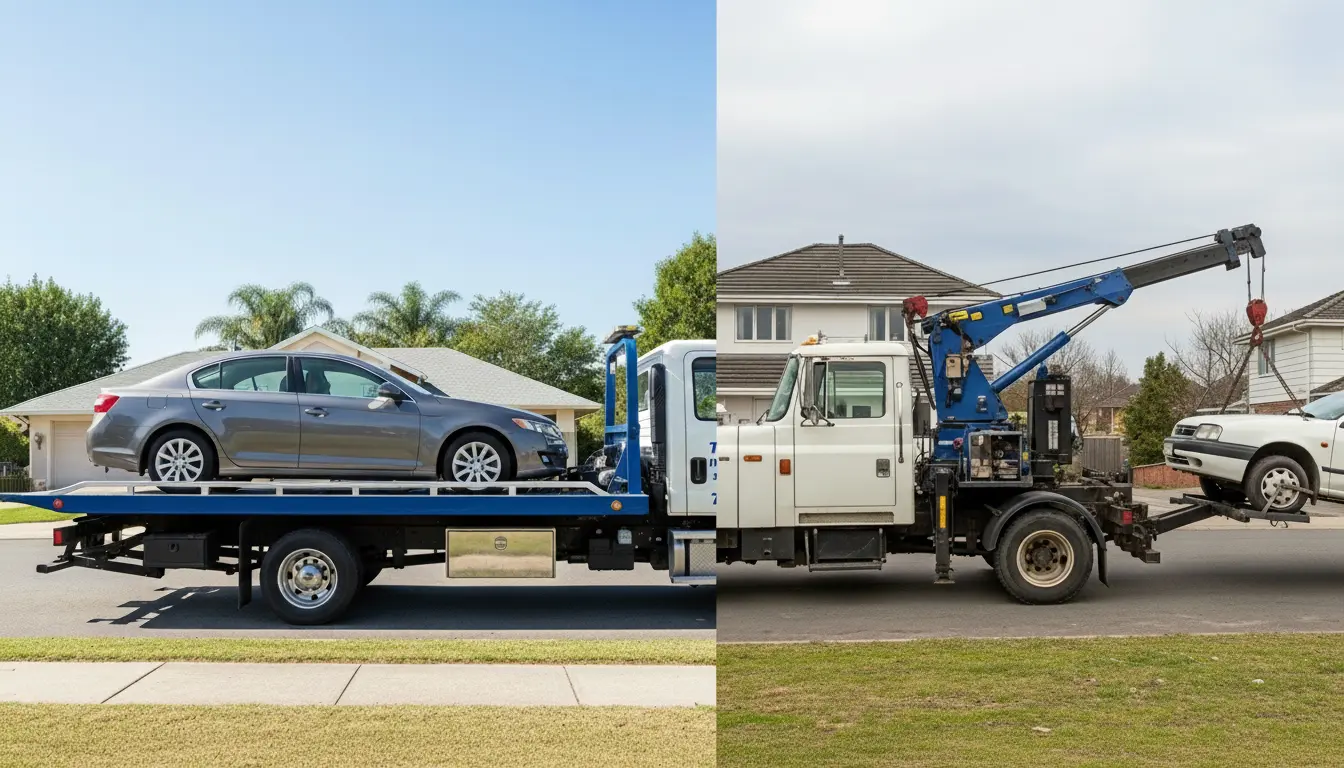
Step 3: Request a Flatbed Tow Truck Only
This step is the most important part of the entire process. Always use a flatbed tow truck for AWD vehicles.
- Call a towing provider
- Clearly state your vehicle is AWD
- Request a flatbed truck only
- Confirm the request before dispatch
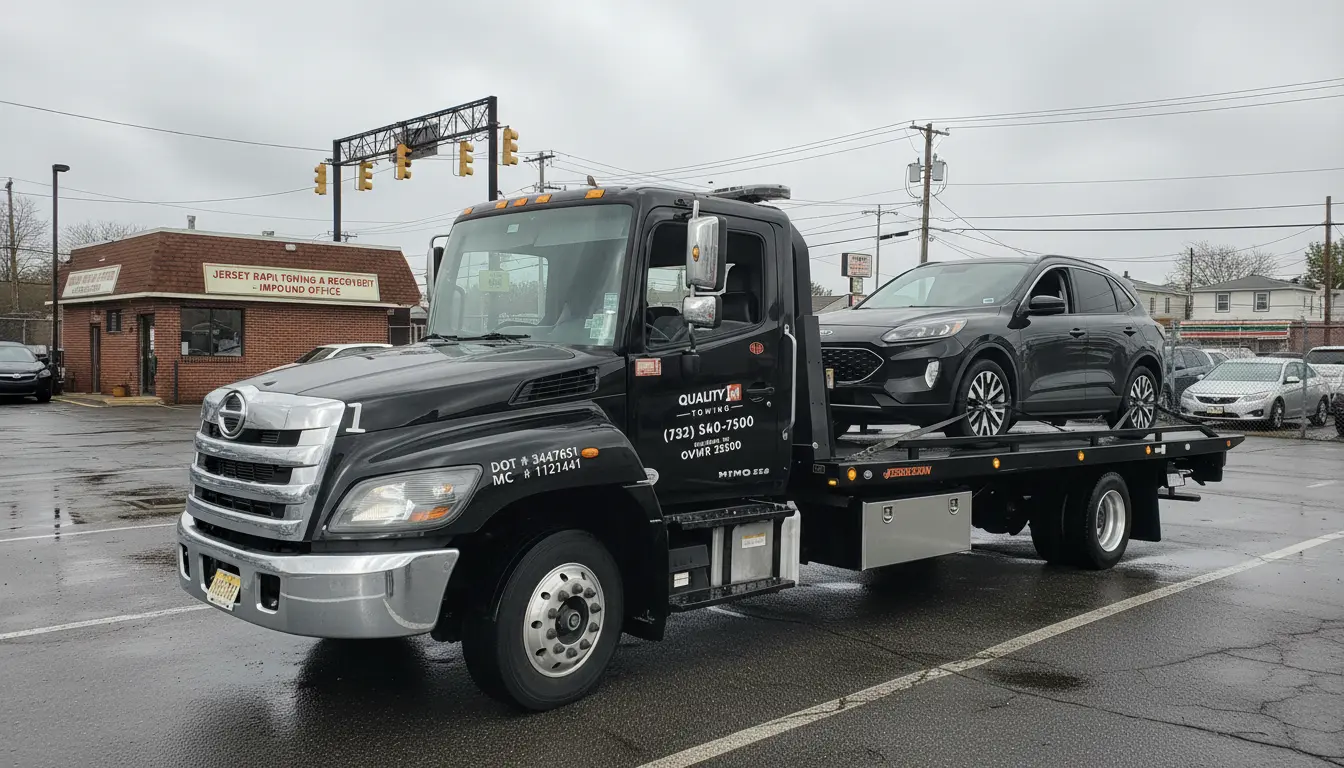
Flatbed towing keeps all four wheels off the ground. This completely prevents drivetrain movement.
If you are arranging towing in NJ, never accept alternatives like wheel lift or dolly unless your manual clearly allows it.
Step 4: Position the Tow Truck Properly
Before loading begins, ask tower to position the tow truck correctly. Proper positioning includes:
- Parking on a flat and stable surface
- Aligning the truck directly in front of the vehicle
- Ensuring enough space for loading
Incorrect positioning can cause uneven loading and increase risk during the process.
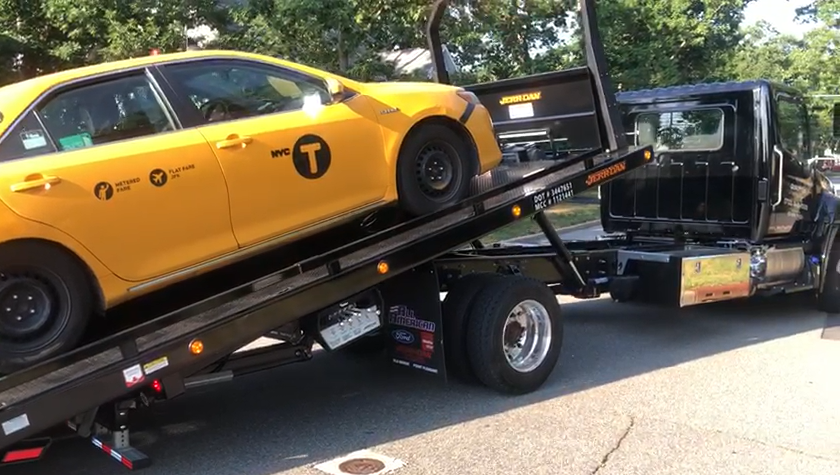
Step 5: Lower the Flatbed Completely
The flatbed must be lowered fully before loading the vehicle. Check that:
- The bed should sit at a gentle angle
- The ramp should touch the ground smoothly
- There should be no sudden drop or gap
This creates a smooth path for loading and prevents underbody damage.
Step 6: Prepare the Vehicle for Loading
Before the vehicle moves, you need to prepare it correctly. Follow these steps:
- Turn the ignition to the correct position
- Shift the gear into neutral if required
- Release the parking brake
- Unlock the steering if needed
Each step ensures the vehicle can move freely onto the flatbed without resistance.
Step 7: Attach the Winch Cable Securely
A winch is used to pull the vehicle onto the flatbed. It must be attached properly by:
- Connecting the cable to a strong frame point
- Avoid attaching to weak or plastic parts
- Making sure the hook is secure
Improper attachment can lead to slipping or damage during loading.
Step 8: Load the Vehicle Slowly Using the Winch
Now the vehicle can be pulled onto the flatbed. Make sure tower uses:
- Use the winch to pull the vehicle slowly
- Keep the wheels straight during movement
- Avoid sudden jerks or fast pulling
- Monitor alignment continuously
Slow and steady loading prevents stress on the vehicle. During towing in NJ, controlled loading becomes even more important because of tight or busy areas.
Step 9: Ensure All Four Wheels Are Off the Ground
Once the vehicle is on the flatbed, confirm that no wheel touches the road. Double check that:
- The vehicle sits fully on the platform
- All tires are clear of the ground
- The car is centered properly
This step protects the AWD system completely.
Step 10: Center the Vehicle on the Flatbed
Proper positioning on the flatbed is necessary for balance. See if they:
- Align the vehicle with the middle of the bed
- Ensure equal spacing on both sides
- Avoid placing the car too far forward or backward
Balanced positioning improves stability during transport.
Also Read: Benefits of Flatbed Towing Over Traditional Towing
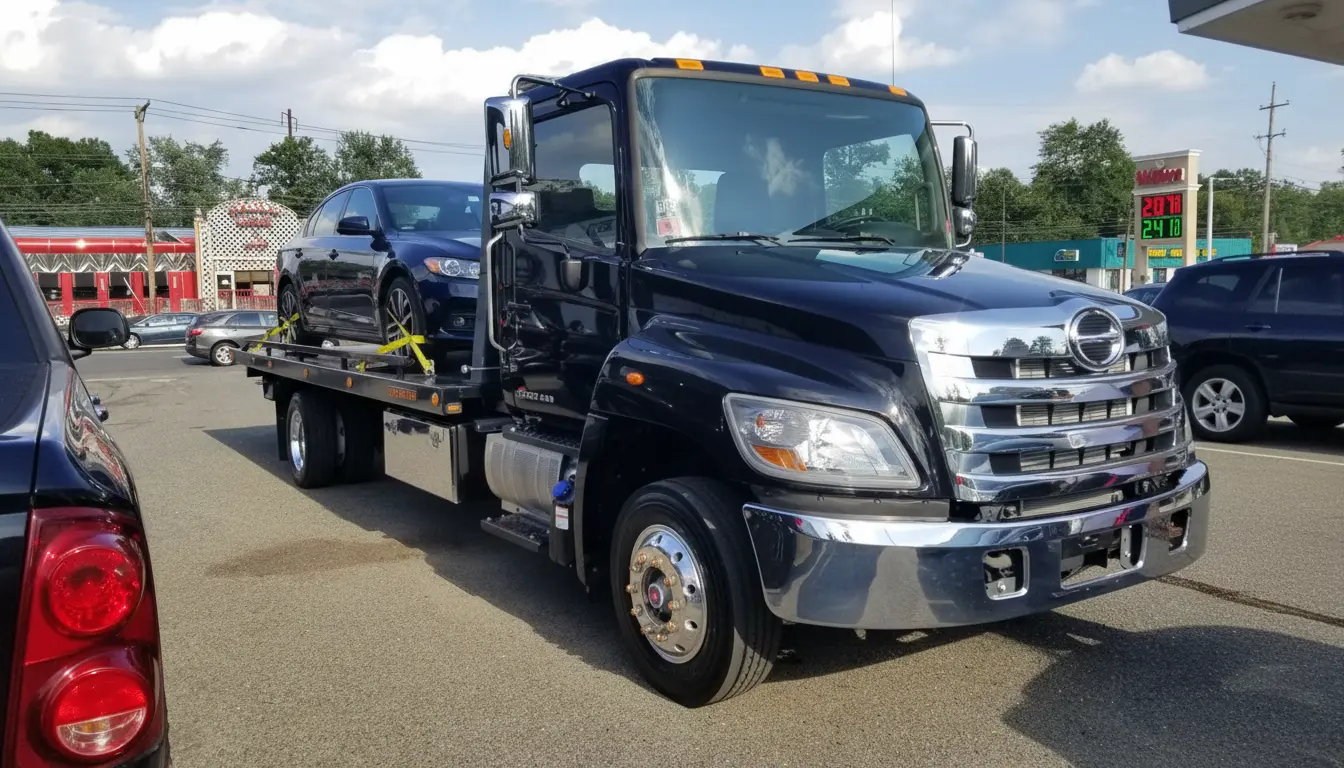
Step 11: Secure All Four Wheels with Straps
The vehicle must be secured using wheel straps. Towers should:
- Place straps over each tire
- Tighten straps evenly
- Check that the car does not move
- Avoid attaching straps to suspension parts
Wheel straps hold the vehicle firmly without causing damage. Always confirm that all four wheels are secured, not just two.
Step 12: Lock the Steering in a Straight Position
The steering must stay stable during towing.
- Keep the wheels straight
- Use steering lock if available
- Prevent any side movement
This avoids unnecessary stress on suspension and steering components.
Step 13: Check Ground Clearance and Angles
Before truck moves, check the vehicle position carefully.
- Ensure the angle is not too steep
- Confirm no part of the car is touching the bed
- Verify there is enough clearance at the front and rear
If needed, adjust the position or use ramp extensions.
Step 14: Perform a Full Safety Inspection
Before transport begins, inspect again that.
- Vehicle is centered
- All wheels are off the ground
- Straps are tight and secure
- Steering is stable
- No loose parts
This step ensures a smooth towing process.
Step 15: Transport the Vehicle Carefully
Once everything is secure, the vehicle can be transported. Make sure tower:
- Maintain steady driving speed
- Avoid sudden braking
- Take smooth turns
- Monitor the load regularly
Careful driving is essential for towing in NJ due to traffic conditions.
Step 16: Prepare for Safe Unloading
At the destination, unloading must be done carefully. Before unloading:
- Park on a flat surface
- Lower the flatbed slowly
- Release straps one by one
This prepares the vehicle for safe removal.
Step 17: Unload Using Controlled Movement
The vehicle should be unloaded using the same controlled method as loading.
- Use the winch to guide the vehicle down
- Keep the wheels straight
- Move slowly and steadily
- Avoid sudden release
Controlled unloading prevents damage and keeps everything safe.
Step 18: Avoid All Incorrect Towing Methods
You must completely avoid any towing method that keeps wheels on the ground. Never use:
- Tow dollies
- Wheel lift towing
- Tow bars
- Flat towing
These methods can damage the AWD system quickly, even over short distances.
Step 19: Communicate Clearly with the Tow Operator
Clear communication helps ensure proper handling.
- Confirm the vehicle is AWD
- Mention any special instructions
- Inform about low clearance if applicable
This ensures the correct method is followed throughout towing.
Step 20: Stay Present During the Process
If possible, stay nearby and monitor:
- Proper equipment usage
- Smooth loading and unloading
- Correct securing method
A quick check from your side adds extra safety.
Get Reliable AWD Towing Service in NJ
If you want the entire process handled without risk, choosing the right professionals makes all the difference. At Quality 1st Towing, our team follows the correct AWD towing process step by step using flatbed trucks and secure handling methods. We are trusted for safe and dependable towing in NJ because our service ensures your vehicle stays protected from pickup to drop off.